
Wondering if your child has dyslexia?
1) Request your appointment date/time
2) Complete the emailed intake form and questionnaire prior to your appointment.
3) Plan on your child being at the office (411 Ft. McKavitt, Ste C, Mason, TX 76856) for 30 minutes (10-15 minutes to visit and get comfortable, 10-15 minutes for the screener).
4) Within 24-hours, your brief report with Dyslexia Probability Index will be emailed to you.
If your student is at-risk, there are additional assessment options for a comprehensive Dyslexia assessment, including reading, writing, and math.
We look forward to working with your child to identify areas of strength and areas for growth to help your student have a successful school year.
Disclaimer: This does not provide an official diagnosis or eligibility for Special Education services. It is intended to serve as a screener for supporting documentation to present to districts when requesting an educational evaluation for Special Education Services.

Upon requesting a free hour consultation, an indepth Intake Form will be emailed to you. This will need to be completed prior to our first meeting. This covers important background information to help me understand your student. It is extremely helpful if you email any/all educational records prior to our first meeting to tina@aeioustudents.com. During the one hour consult, we will discuss your goals and concerns regarding your student’s educational needs and determine if/how I can assist you going forward.

You must first complete the initial intake, submit all educational records, and have completed your free one hour consultation. Student must be available for 15 minutes to complete the battery. It is suitable for ages 5 through 89. The written report will include a probability index, Dyslexia Interventions, and recommendations to develop targeted intervention plans to support students needs in the classroom.
Disclaimer: This does not provide an official diagnosis or eligibility for Special Education services. It is intended to serve as a screener for supporting documentation to present to districts when requesting an educational evaluation for Special Education Services.

Prior to booking this, you must complete the comprehensive intake, submit all educational records, and have completed the free one hour initial consultation. The student must be available for up to an hour to complete the assessment. Pricing includes a comprehensive written report with the dyslexia probability index, composite & subtest scores, and a detailed list of interventions and classroom supports.
Disclaimer: This does not provide an official diagnosis or eligibility for Special Education services. It is intended to serve as a screener for supporting documentation to present to districts when requesting an educational evaluation for Special Education Services.

Wide Range Achievement Test (WRAT) measures academic skills in four areas: Word Reading, Sentence Comprehension, Spelling, and Math Computation. It assesses a student’s ability to recognize words, understand sentences, spell words, and solve math problems. The Reading Composite score combines Word Reading and Sentence Comprehension scores to provide an overall measure of reading ability. It can help identify possible learning disabilities.
Administration time: Approximately 30 minutes for ages 5 to 7, and 45 minutes for ages 8 and up.
For ages 5 to 85+
Disclaimer: This does not provide an official diagnosis or eligibility for Special Education services. It is intended to serve as a screener for supporting documentation to present to districts when requesting an educational evaluation for Special Education Services.

A quick and easy child development assessment of school readiness. It uses simple pointing responses, making it helpful for children who are shy or have language difficulties. The assessment covers more than 150 concepts, including STEM/STEAM skills, and can help identify students who may qualify for gifted and talented programs.
Administration time: 30 minutes
For ages 3 years through 7 years, 11 months

Identifies students who are gifted and/or talented in general intellectual ability and academic aptitude.
It includes four subtests:
Nonverbal Reasoning measures problem-solving using pictures and shapes.
Language Arts/Social Studies measures skills in reading, writing, literature, and social studies.
Verbal Reasoning measures problem-solving using word relationships.
Mathematics/Science measures knowledge and skills in math and science.
The test provides three overall scores:
Reasoning Ability score combines the two reasoning subtests
Academic Ability score combines the language arts/social studies and math/science subtests
General Ability score combines all four subtests
Adminsitration time: up to 2.5 hours
For Kindergarten (5 years) through 8th grade (age 14 years, 11 months).
Disclaimer: This does not provide an official diagnosis or eligibility for G/T services. It is intended to serve as a screener for supporting documentation to present to districts when requesting an educational evaluation for G/T testing or as an accompaniment for Special Education Services for our 2E students.

A one-hour block is scheduled.
The School Motivation and Learning Strategies Inventory (SMALSI) helps identify learning and study habits that may affect school success. It measures 10 areas, including study skills, note-taking, reading, writing, test-taking, organization, time management, motivation, test anxiety, and attention.
Adminsitration time: Approximately 20–30 minutes to complete and uses simple questions written at a 3rd-grade reading level.
For ages 8 - 18 and college students.
Disclaimer: This is not provide an official diagnosis or eligibility for Special Education services. It is intended to serve as a screener for supporting documentation to present to districts when requesting an educational evaluation for Special Education Services. It can also be presented to the school help to identify learning strategies that may make school more difficult. This information can guide support for students with ADHD, learning disabilities, low motivation, or other learning challenges and help improve academic success.

The Personality Assessment Inventory (PAI) is a self-report test that measures adult mental health and personality. It includes 344 questions written at a 4th-grade reading level. The test measures 22 areas, including anxiety, depression, stress, aggression, substance use, relationships, and personality traits.
For ages 18+
Disclaimer: This does not provide an official diagnosis for mental health issues. Referrals for high indicators will be provided.
I am a mandatory reporter of child abuse, elder abuse, and/or immenient danger or harm.

The Trauma Symptom Checklist for Children (TSCC-A) helps assess children and teens who have experienced traumatic events, such as abuse, loss, disasters, or violence. The checklist has 54 questions and measures emotional responses related to trauma, including anxiety, depression, anger, posttraumatic stress, and dissociation. (Used when no sexual issues are involved.)
Administration time is under 30 minutes.
For ages 8 to 16 years.
Disclaimer: This does not provide an official mental health diagnosis or eligibility for Special Education services. It is intended to serve as a screener for supporting documentation to present to districts when requesting an educational evaluation for Special Education Services. This can also serve as documentation for other needed areas of support in school.
I am a mandatory reporter of child abuse, elder abuse, and/or immenient danger or harm.

The PSI-4 is useful in programs aimed at early identification and prevention of family problems. It is also helpful in planning intervention and treatment, assessing child abuse, and completing forensic evaluations for child custody.
The Parenting Stress Index, Fourth Edition (PSI-4) measures stress that can affect parenting and a child's well-being. It includes 120 questions written at a 5th-grade reading level. The test looks at child behaviors, parent well-being, family relationships, and other factors that may increase parenting stress. Results help identify areas where families may need support or intervention.
Administration time is about 30 minutes.
For parents of children 1 month - 12 years old.
I am a mandatory reporter of child abuse, elder abuse, and/or immenient danger or harm.

The PETRA is a threat assessment tool for adolescents who show violent or threatening behavior, especially at school. It helps identify risk factors, strengths, and areas of concern to guide assessment, intervention, and behavior planning. The test measures emotional, family, school, stress, coping, and behavior factors, along with response accuracy. Results should be used with interviews, background information, and input from parents, teachers, and others.
It takes about 30 minutes to complete.
For ages 11 - 18 years old.
I am a mandatory reporter of child abuse, elder abuse, and/or immenient danger or harm.

Comprehensive intake and initial consultation to determine student needs and parents’ goals. The following are advocacy services we can assist with.
Request/review educational, medical, and mental health records.
Explain the identification of the Thirteen Eligibility Criteria under the Individuals with Disabilities Education Act (I.D.E.A.).
Determine if there is evidence of suspected Special Education eligibility.
Complete academic assessments: Dyslexia Screener, Tests of Dyslexia Comprehensive Tests, comprehensive academic testing, ADHD Screeners, etc., to further determine evidence for an SLD: Specific Learning Disability
Work with the parent to request Special Education evaluations (Speech Therapist, Occupational Therapist, Physical Therapist, Behavior Therapist, etc.).
Review the Bell Curve and explain the Full and Individual Evaluation with parents.
Accompany parents (in person or via Zoom) to ARD committee meetings for 504 or IEP’s.
Assist parents/districts in developing a
Section 504 for accommodations, communication, mobility, and Individual Care Health Care Plans.
Assist parents/districts in developing an Individual Education Plan (IEP): to include Least Restrictive Environment (LRE), Specially Designed Instruction (SDI), frequency/duration of services/supports, assistive technology (AT), behavior (FBA: Functional Behavior Analysis, BIP: Behavior Intervention Plan, MDF: Manifestation Determination Review), SMART goals (specific, measurable, achievable, relevant, time-bound), and progress monitoring.
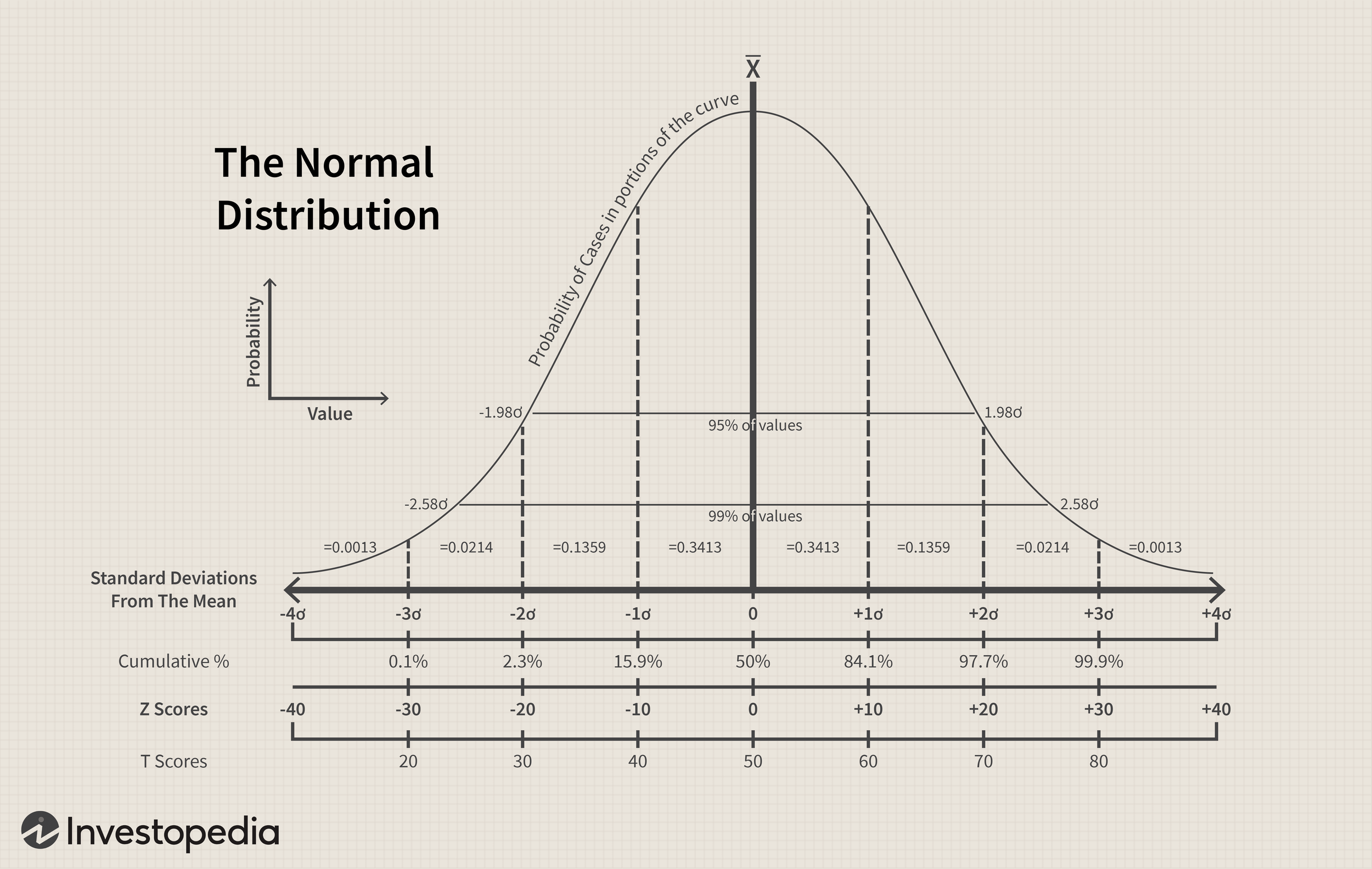
Bring your student’s recent Psychoeducational Evaluation or Full and Independent Education Evaluation for a one-on-one discussion of the bell curve and how to read your student’s scores: standard scores, T-scores, percentile ranks. We’ll discuss your student’s strengths and weaknesses and determine the next course of action to meet your goals.
No results match your search. Try removing a few filters.
